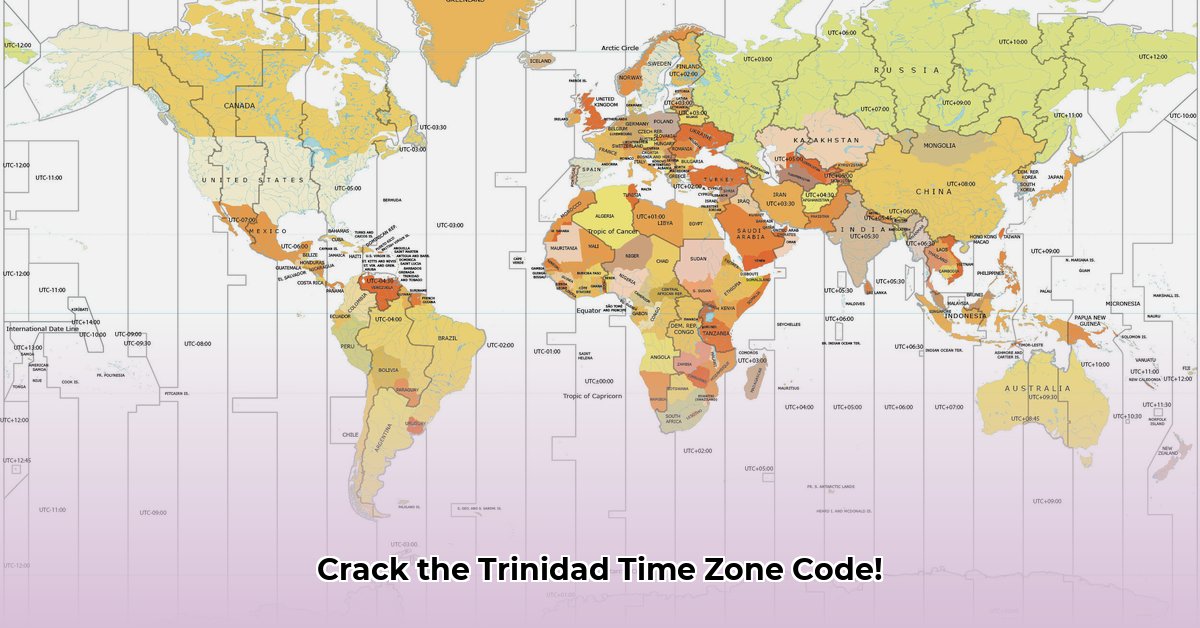
Time is a critical asset, especially in the business world. While Trinidad and Tobago maintains a consistent UTC offset of -4:00, merely knowing the time isn't sufficient for organizations demanding precise time synchronization. For more detailed information on Trinidad and Tobago time, check out this helpful resource: Trinidad time. This report outlines current timekeeping practices, identifies market gaps, and provides actionable steps for businesses to improve their time synchronization strategies, mitigating risks and ensuring compliance.
Current State of Time Synchronization in Trinidad and Tobago
Many individuals and smaller businesses rely on readily available online time services. These provide a convenient, albeit imprecise, solution. However, this method lacks the accuracy and redundancy needed for critical business operations. A simple website outage could significantly disrupt businesses dependent on this approach. Isn't it concerning to consider the potential impact of such a vulnerability on your operations?
Market Gap Analysis: Addressing the Need for Precision
The limitations of freely accessible online time services highlight a substantial market gap. Numerous organizations, particularly in finance, telecommunications, and logistics, require significantly more accurate and reliable timekeeping. This unmet need represents a considerable opportunity for specialized service providers to offer advanced time synchronization solutions. The absence of readily available, reliable services presents a clear opportunity.
Industry-Specific Needs: High-Precision Timekeeping
Different sectors have vastly different time synchronization requirements. For example:
- Finance: High-frequency trading demands microsecond-level accuracy (millionths of a second). Even fractional second delays can lead to substantial financial losses or gains.
- Telecommunications: Precise time synchronization is crucial for smooth network operation. Inaccurate timing can cause dropped calls, slow connections, and system instability.
- Logistics: Minor timing discrepancies can disrupt delivery schedules, inventory management, and overall efficiency, impacting profitability.
These industries cannot rely on free, readily available online time services. The cost of inaccurate time drastically outweighs the investment in robust time synchronization systems.
Recommendations for Businesses and Government Agencies
Businesses and government agencies can significantly improve their time synchronization strategies by following these steps:
- Needs Assessment: Carefully evaluate your organization's specific needs regarding time precision and redundancy. This assessment will determine the appropriate level of investment and technological solution.
- Solution Exploration: Research time synchronization solutions, such as Network Time Protocol (NTP) servers (a networking protocol for synchronizing computer clocks) or GPS-based systems, considering factors like accuracy and redundancy.
- Redundancy Implementation: Never depend on a single time source. Implement multiple independent time sources to ensure continuous operation even during outages. This minimizes risk and maximizes uptime.
- Regular Maintenance: Scheduled system checks, updates, and maintenance are crucial for optimal performance and accuracy. Regular maintenance is not "nice-to-have" but essential for reliable time synchronization.
Risk Mitigation: Safeguarding Against Outages and Errors
The risks associated with inadequate time synchronization are significant. Over-reliance on a single source leaves businesses vulnerable to outages and errors. Network issues and hardware failures can impact online time services, highlighting the need for robust backup systems, ideally employing multiple independent time sources. Lack of precision with free online time services can lead to costly errors in time-sensitive operations.
Regulatory Considerations: Compliance and Best Practices
Time synchronization systems must comply with relevant data privacy regulations and cybersecurity standards, especially when handling sensitive data. Proactive engagement with regulatory bodies is recommended to ensure full compliance. Adherence to international standards, such as those defined by the Network Time Protocol (NTP), is vital for interoperability.
Conclusion: The Importance of Precise Timekeeping
While Trinidad and Tobago's time zone is straightforward (-4:00 UTC), achieving precise time synchronization is crucial for numerous businesses. The market gap for specialized services presents an opportunity. Investing in robust timekeeping solutions isn't merely an expense; it's a strategic investment in operational efficiency, risk mitigation, and regulatory compliance. The future of time synchronization hinges on adopting advanced technologies and adapting to the ever-evolving regulatory landscape.